
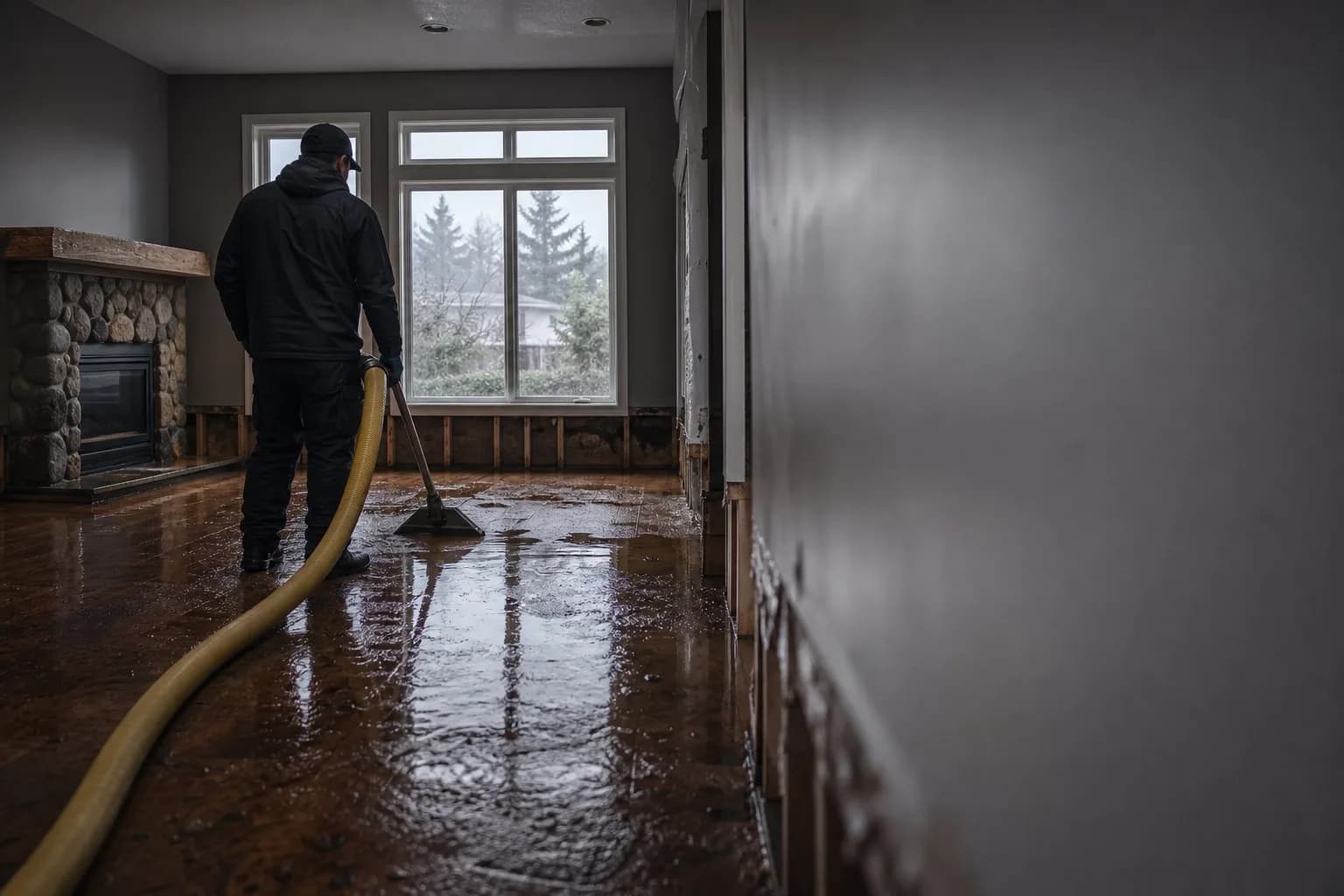
Elite Water Damage Restoration
Burnaby
Burst pipes, basement flooding, storm damage, sewage backup — whatever hit your home or business, our Burnaby water damage restoration and repair team responds fast and returns your property to pre-loss condition.
- Available 24 hours a day, every day of the year
- IICRC certified water damage restoration specialists
- Full structural drying with industrial-grade equipment
- We handle insurance documentation and claims support
Serving Burnaby and all of Metro Vancouver — IICRC Certified · Licensed & Insured
Always On
24/7 Emergency Response
Certified
IICRC Certified
Fully Covered
Licensed & Insured
Local Experts
Burnaby & Metro Van
Water Damage Services — Burnaby, BC
Water Damage Restoration & Repair Services in Burnaby
From emergency water extraction and structural drying through full material repair and final inspection — our Burnaby restoration specialists handle every phase of water damage recovery under one roof.
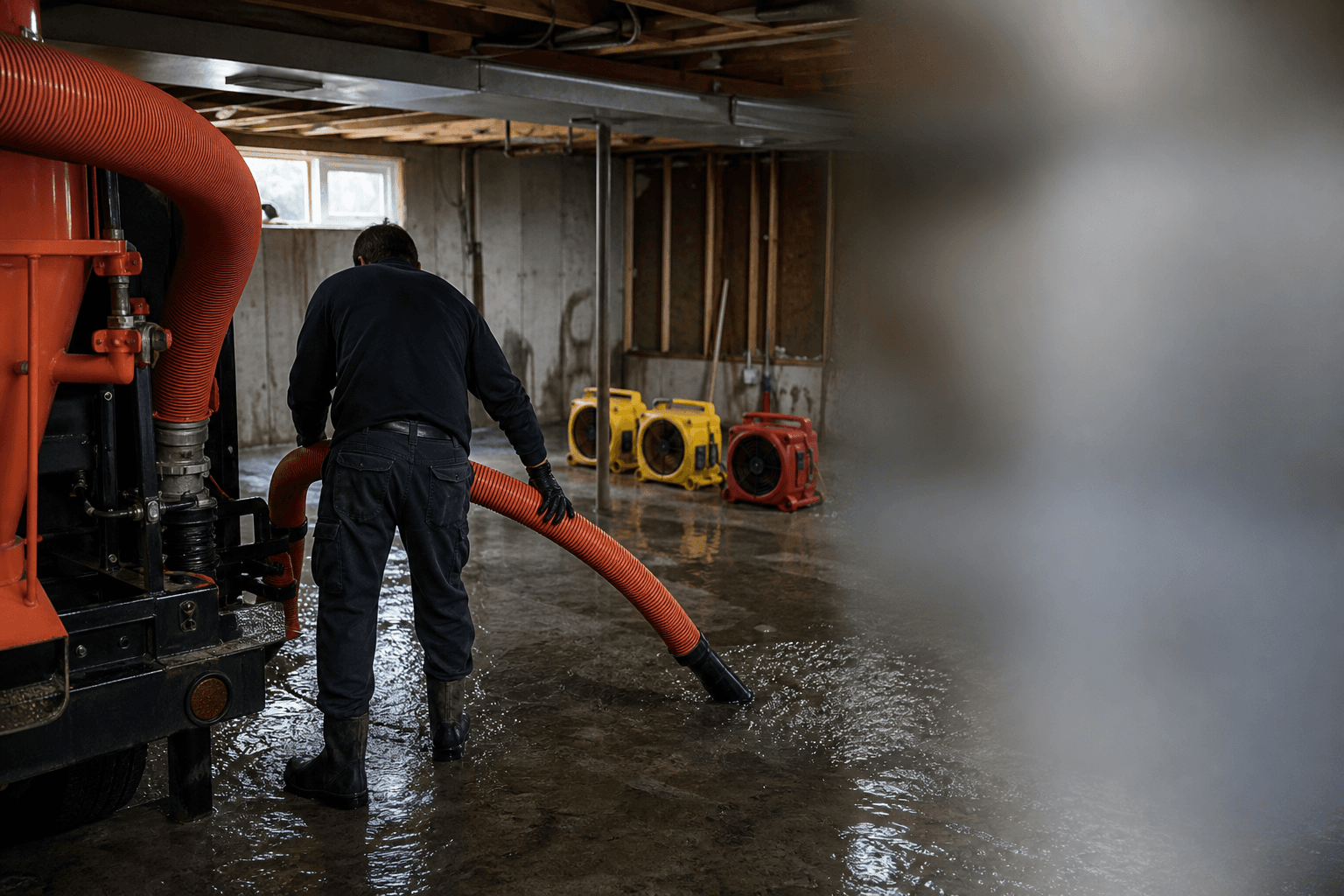
Emergency Water Removal
Rapid emergency water extraction using truck-mounted equipment, available around the clock for Burnaby homes and businesses.
Learn more →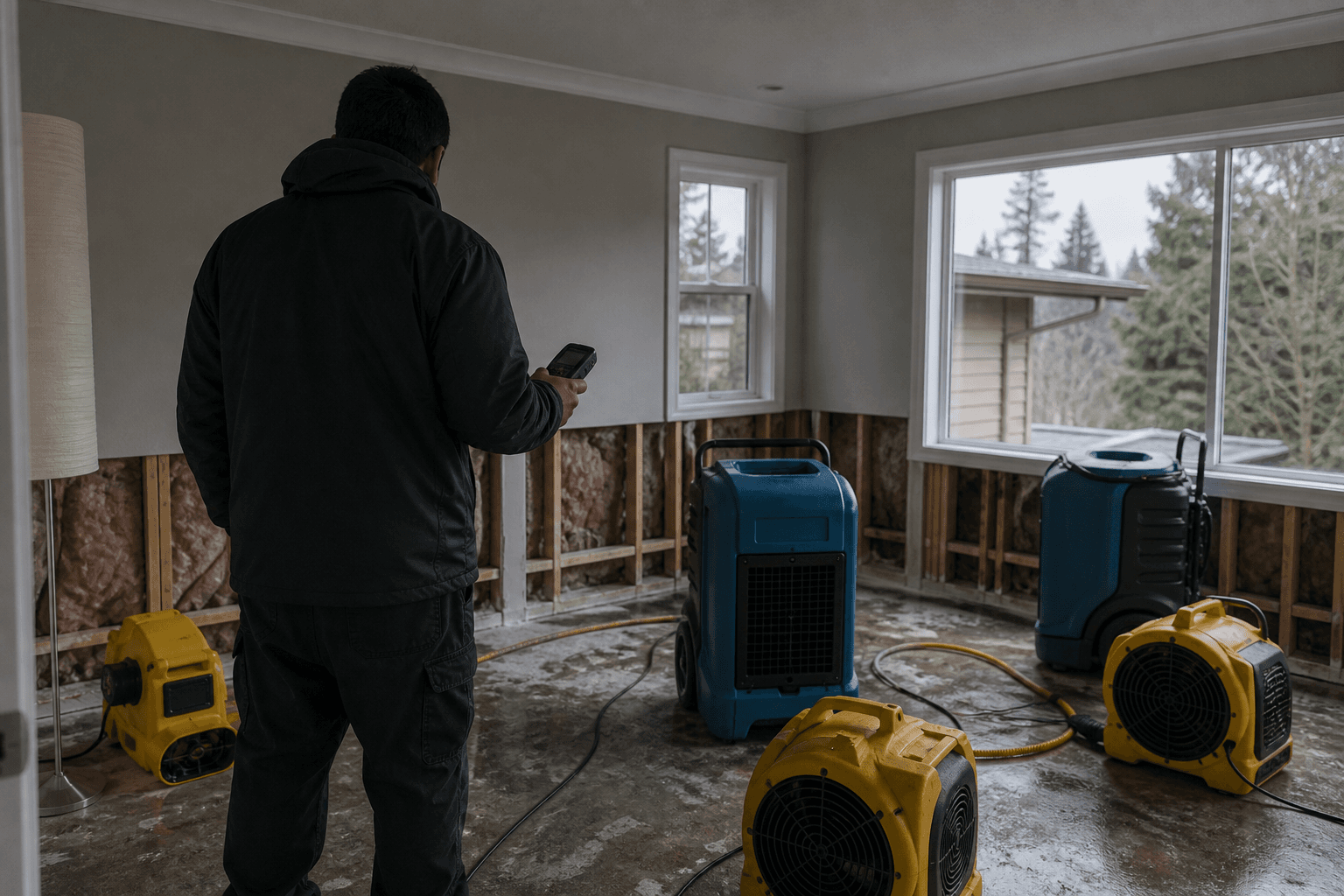
Water Damage Restoration
Comprehensive water damage restoration from extraction through structural drying, repairs, and final inspection.
Learn more →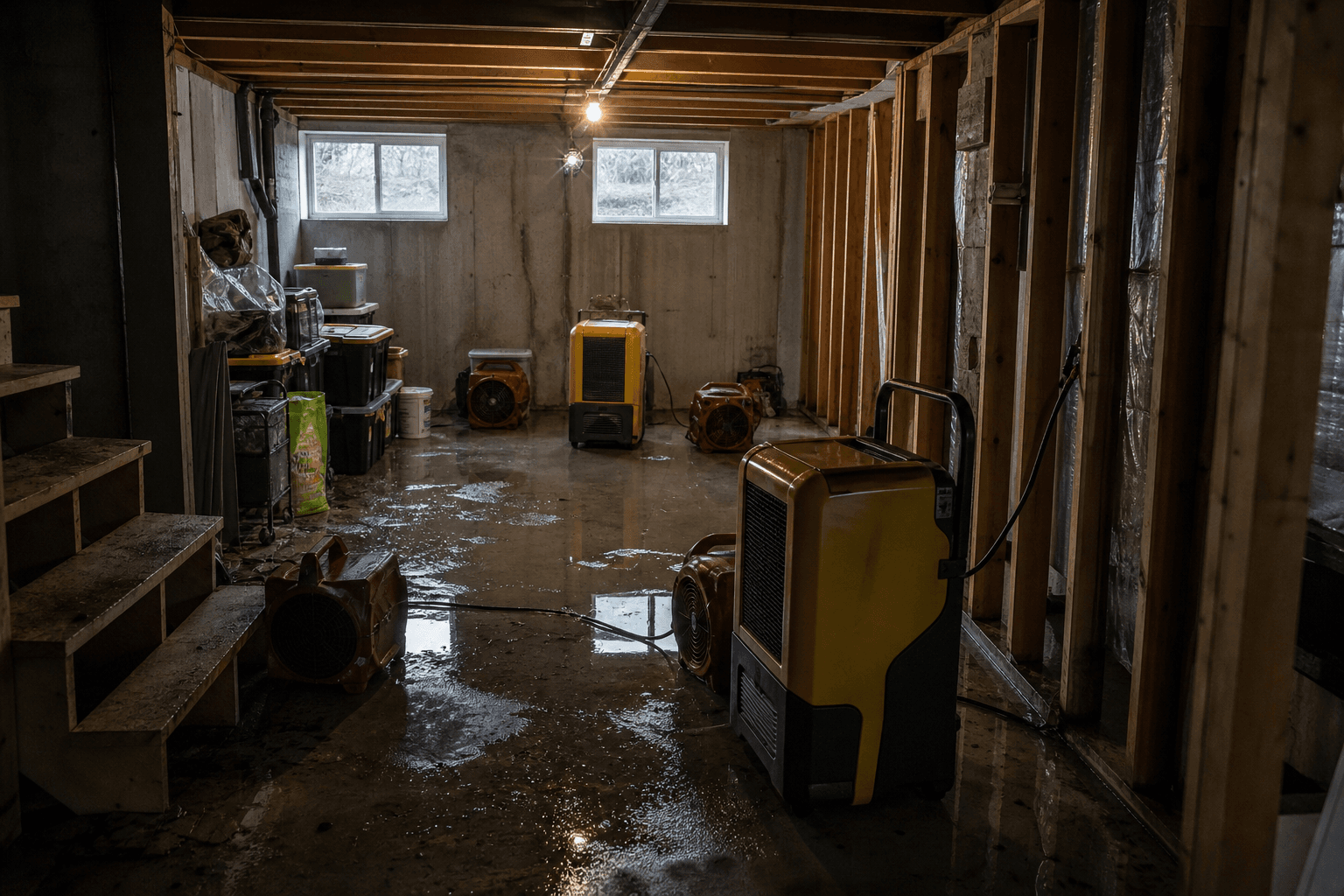
Basement Flooding & Restoration
Complete basement flood cleanup, water extraction, drying, mould prevention, and structural restoration for Burnaby homeowners.
Learn more →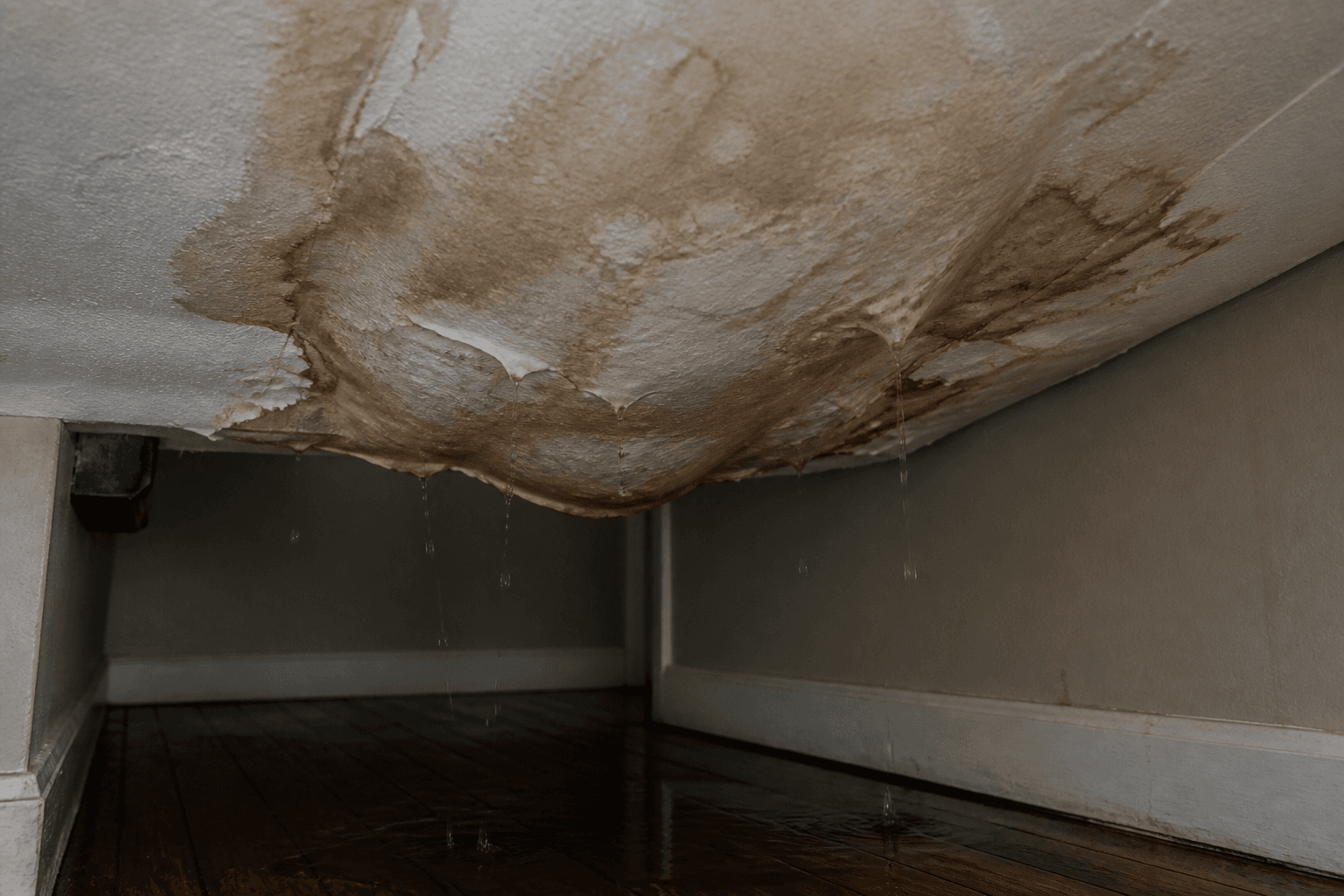
Ceiling Water Damage Repair
Expert assessment and repair of ceiling water damage — from minor staining to collapsed drywall caused by roof leaks, burst pipes, or upstairs flooding.
Learn more →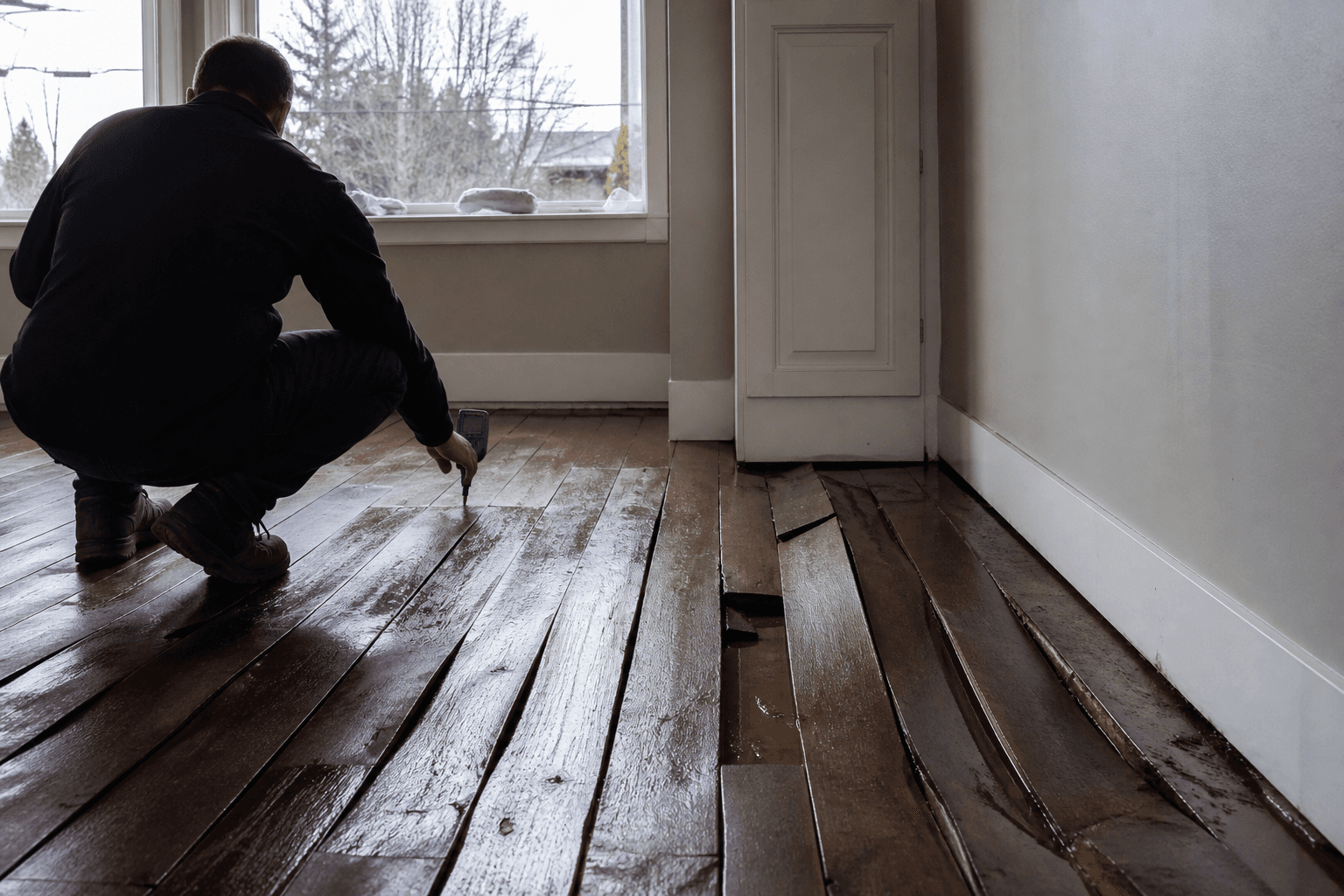
Floor & Hardwood Water Damage Restoration
Targeted drying and restoration for hardwood, laminate, tile, and subfloor damage from water intrusion or flooding events.
Learn more →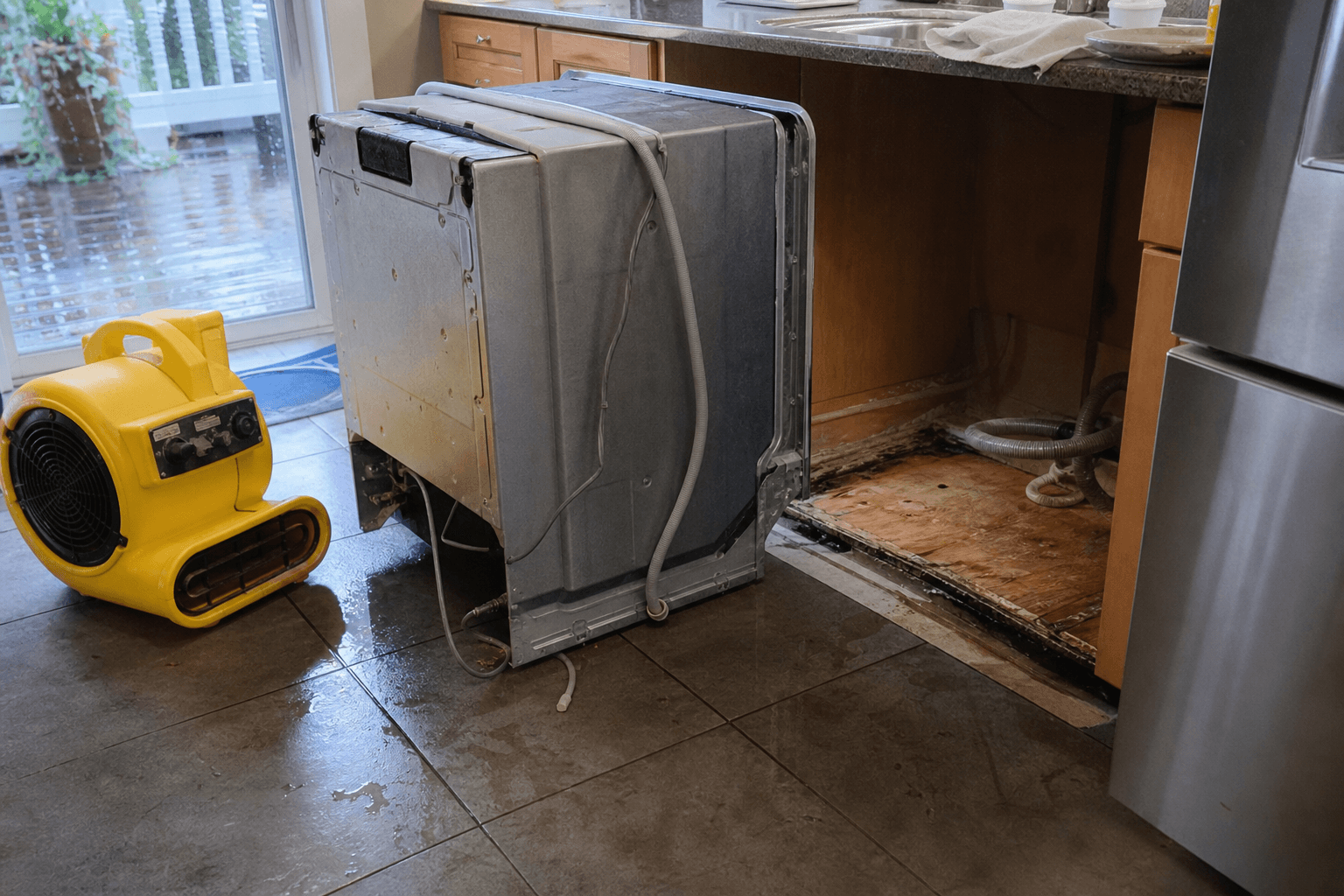
Appliance Leak Cleanup
Fast response to water damage from dishwasher, refrigerator, washing machine, and water heater leaks before mould sets in.
Learn more →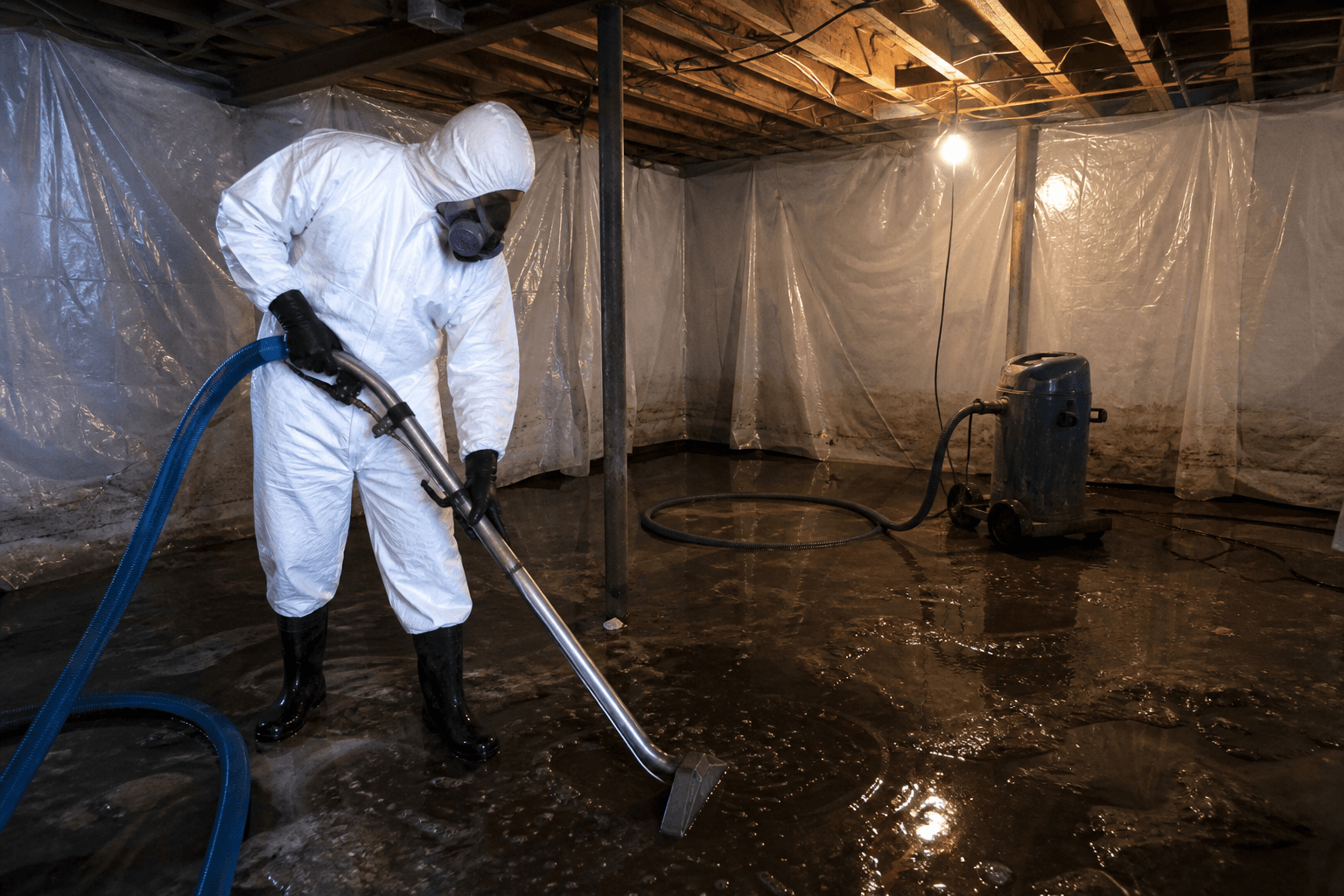
Sewage Cleanup & Restoration
Professional sewage backup cleanup, biohazard containment, disinfection, and full restoration for Burnaby properties.
Learn more →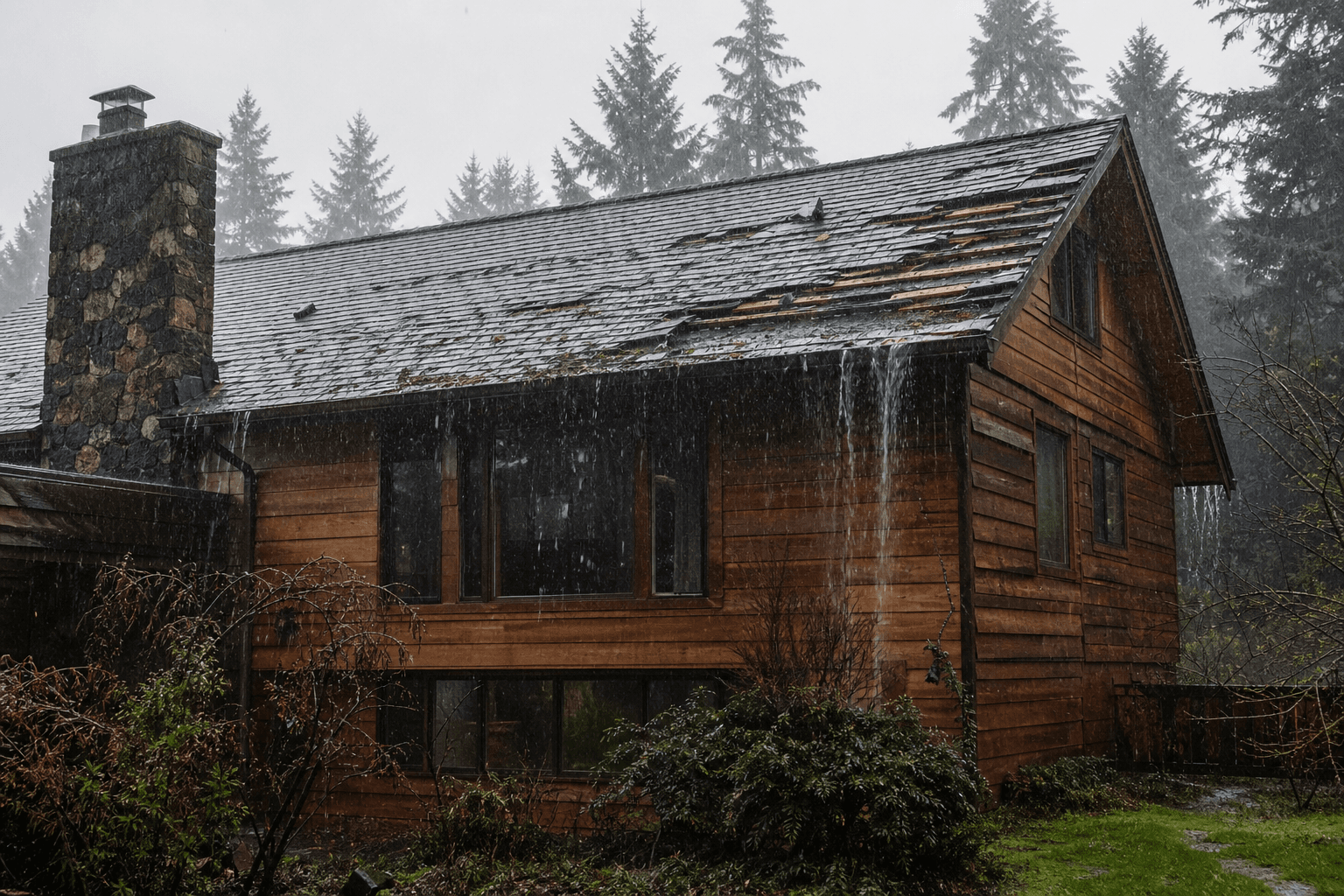
Storm Damage Restoration
Emergency storm water intrusion response — roof leaks, window failures, and flooding from Pacific Northwest storms handled fast.
Learn more →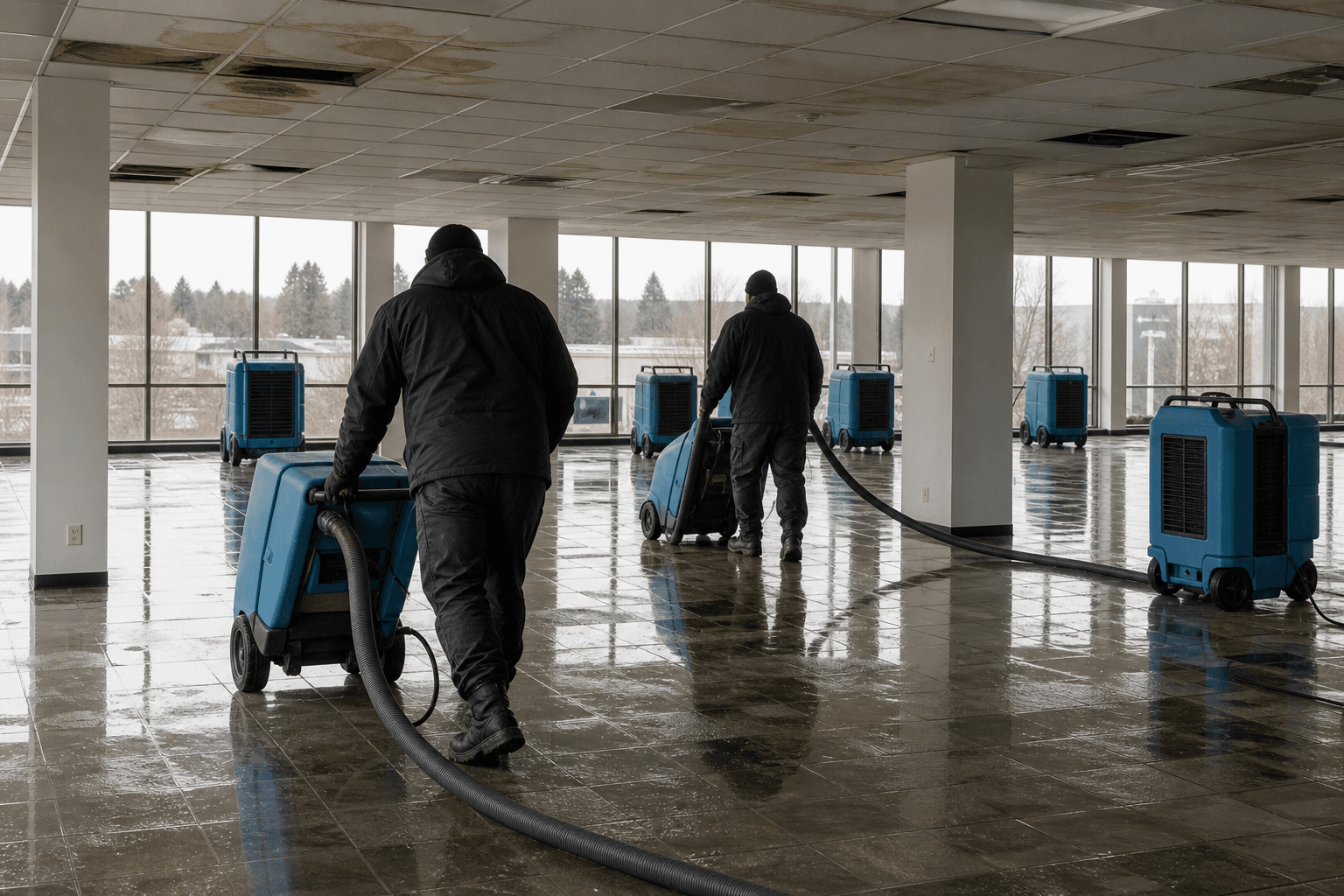
Commercial Water Damage Restoration
Large-loss commercial water damage recovery for offices, retail spaces, warehouses, and multi-unit buildings across Burnaby.
Learn more →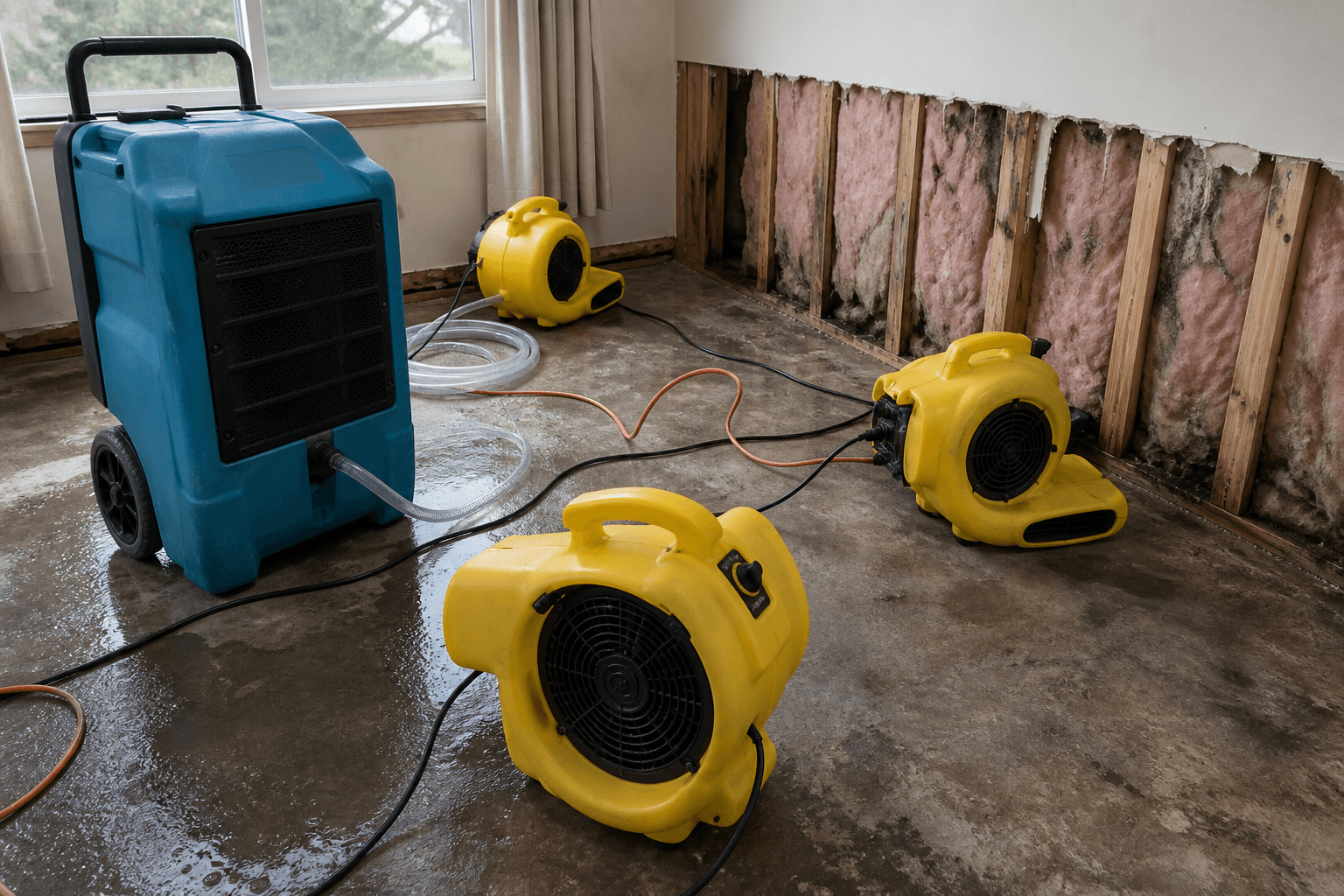
Structural Drying & Dehumidification
Industrial-grade LGR dehumidifiers and high-velocity air movers deployed to achieve complete structural drying before mould can develop.
Learn more →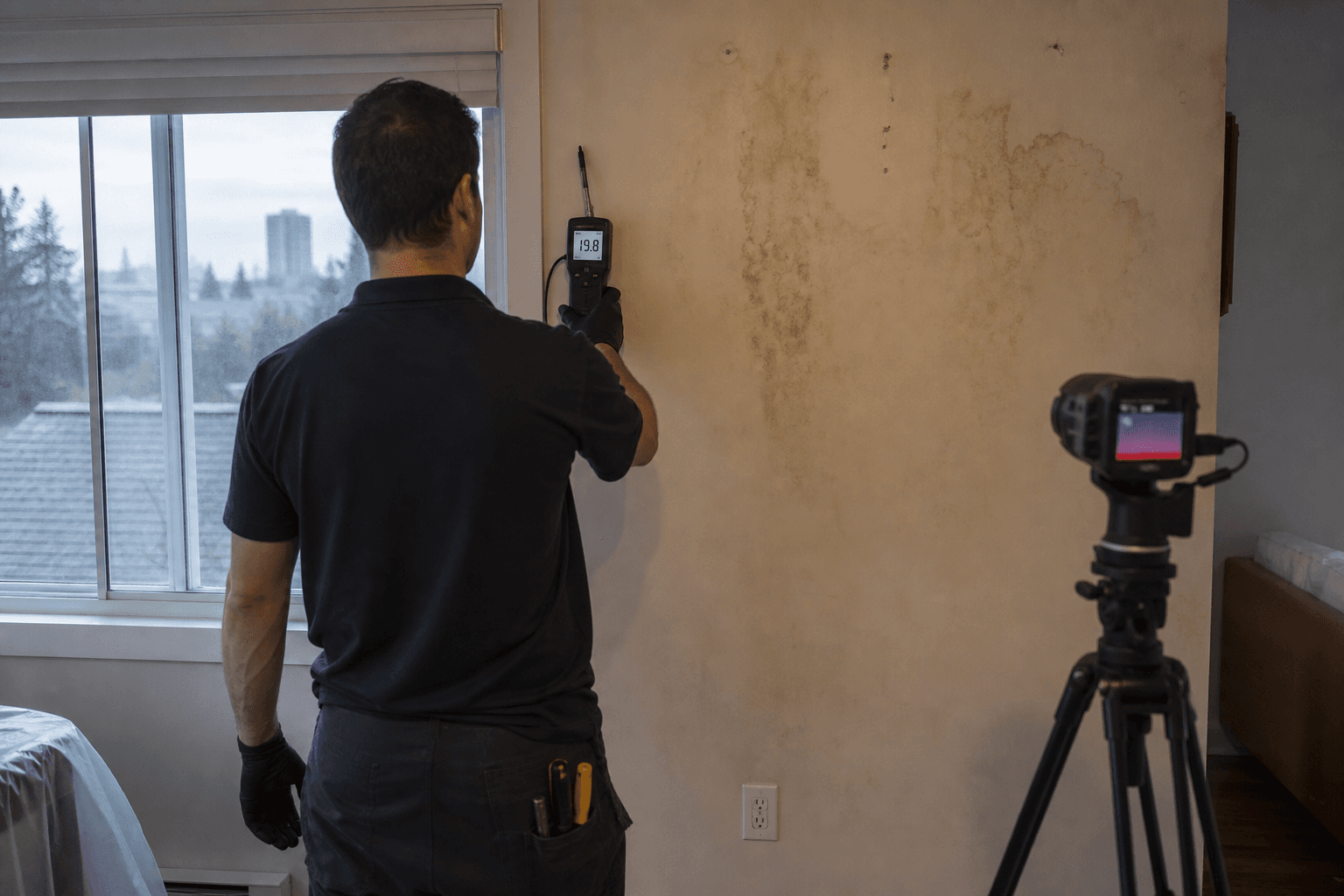
Water Damage Assessment & Inspection
Thorough moisture mapping, thermal imaging, and professional water damage assessment to document scope and guide restoration planning.
Learn more →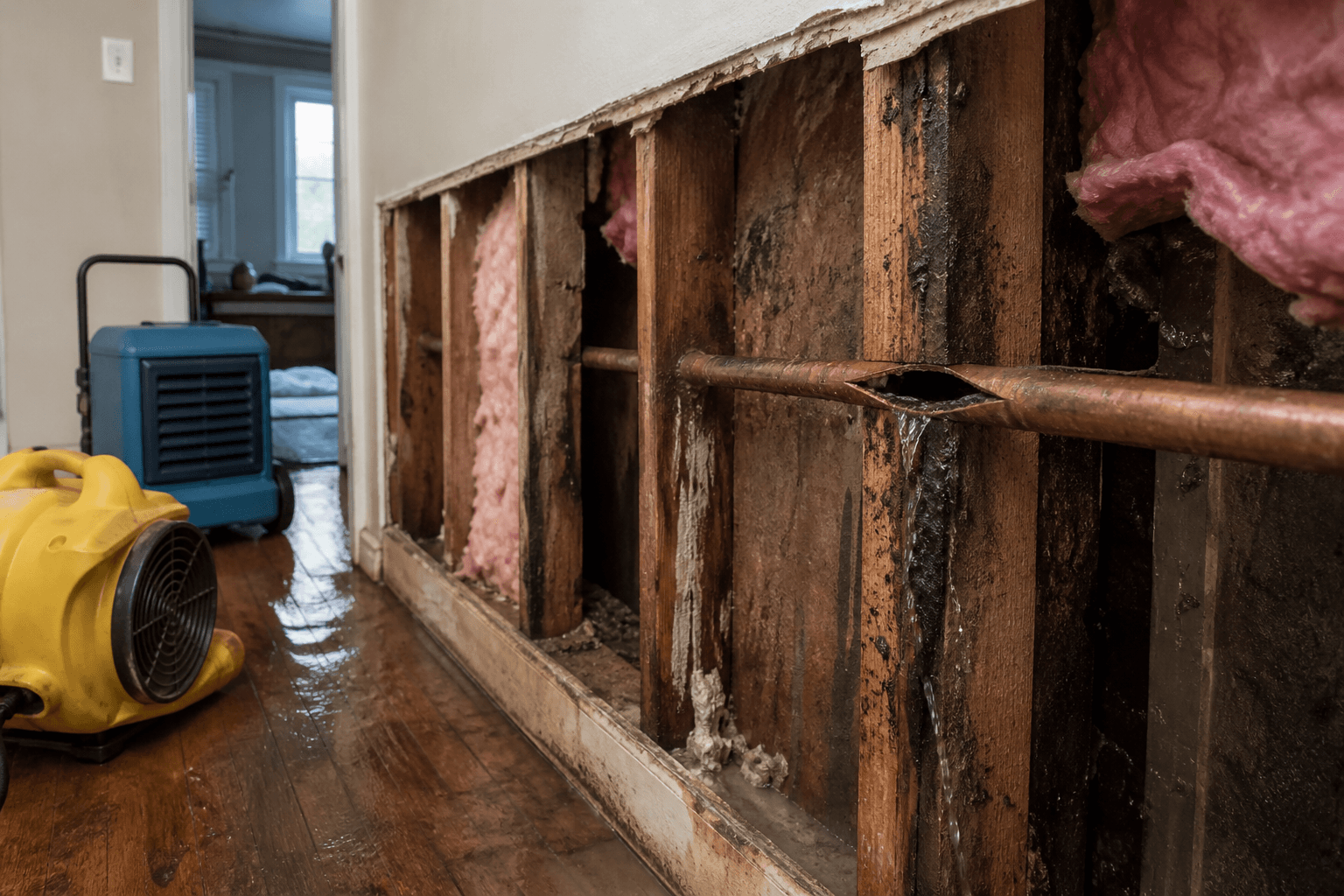
Burst Pipe Water Damage Repair
Immediate response to burst and frozen pipe water damage — extraction, drying, and full structural restoration to pre-loss condition.
Learn more →Water Emergency in Burnaby Right Now?
Don't wait. Every hour matters. Our water damage restoration crew is on call 24/7.
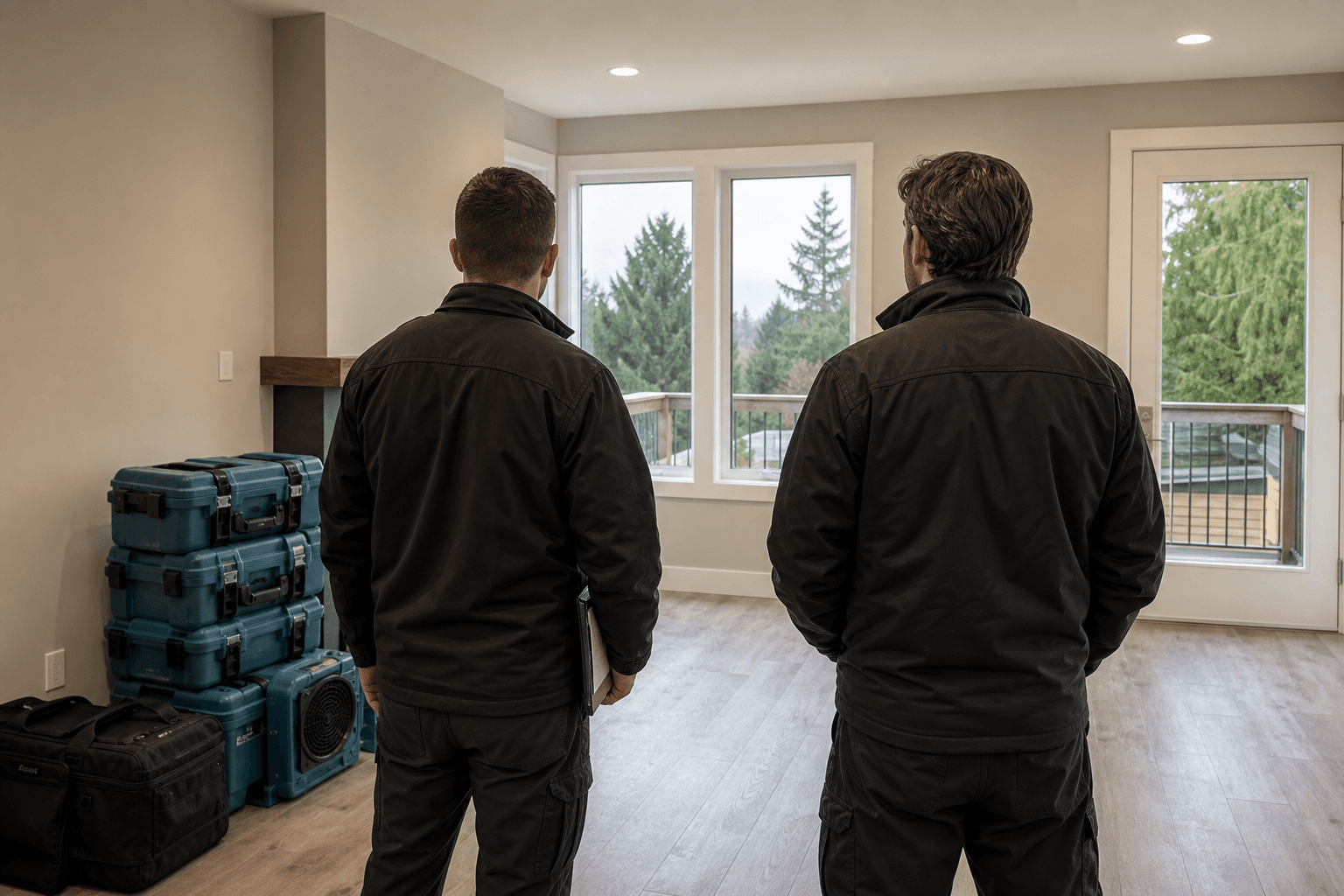
24/7
Emergency
Response
Why Burnaby Chooses Us
Water Damage Restoration & Repair in Burnaby — Done Right Every Time
We Respond While Others Are Still Answering
Water damage gets worse with every hour that passes. Our Burnaby team mobilizes immediately — day, night, weekends, and holidays — because mould can begin developing within 24 hours of a water event.
Industrial Equipment That Actually Dries Structures
We use truck-mounted extractors, LGR dehumidifiers, and high-velocity air movers — the same commercial-grade equipment that large-loss restoration crews bring to major property disasters. Household fans don't cut it.
IICRC Certified Restoration Specialists
Every technician on our team holds IICRC certification in water damage restoration. That means we follow proven protocols, document everything properly, and restore your property to the industry standard — not just what looks dry on the surface.
We Work With Your Insurance
Navigating an insurance claim after a water emergency is stressful enough. We document the damage thoroughly, provide the reports your adjuster needs, and can work directly with your insurer to simplify the process.
Complete Repair & Restoration, Not Just Cleanup
We don't hand off the job halfway. From the first water extraction through structural drying, mould prevention, material repairs — drywall, flooring, framing — and final inspection, we see the project through until your property is fully repaired and restored.
Locally Based, Metro Vancouver Focused
We're a Burnaby-based restoration company, not a national call centre that dispatches strangers from out of town. We know the local housing stock, we understand Pacific Northwest moisture conditions, and we're accountable to this community.
Our Proven Process
How Burnaby Water Damage Restoration Works
A structured, documented restoration process that follows IICRC S500 standards — so your property is restored completely, not just dried on the surface.
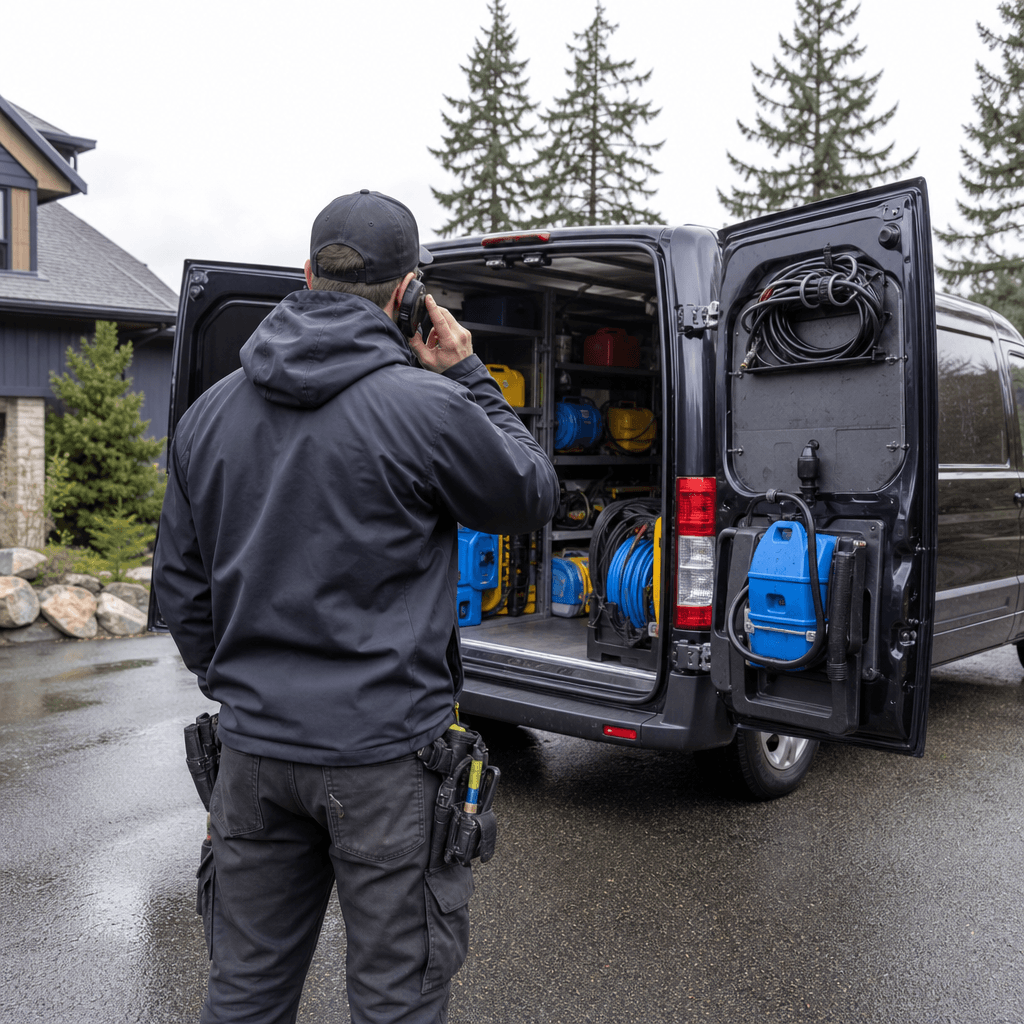
Emergency Call & Rapid Dispatch
You call us any time — day or night. We assess the situation over the phone, dispatch our nearest Burnaby-area crew immediately, and give you immediate guidance on what you can safely do before we arrive.
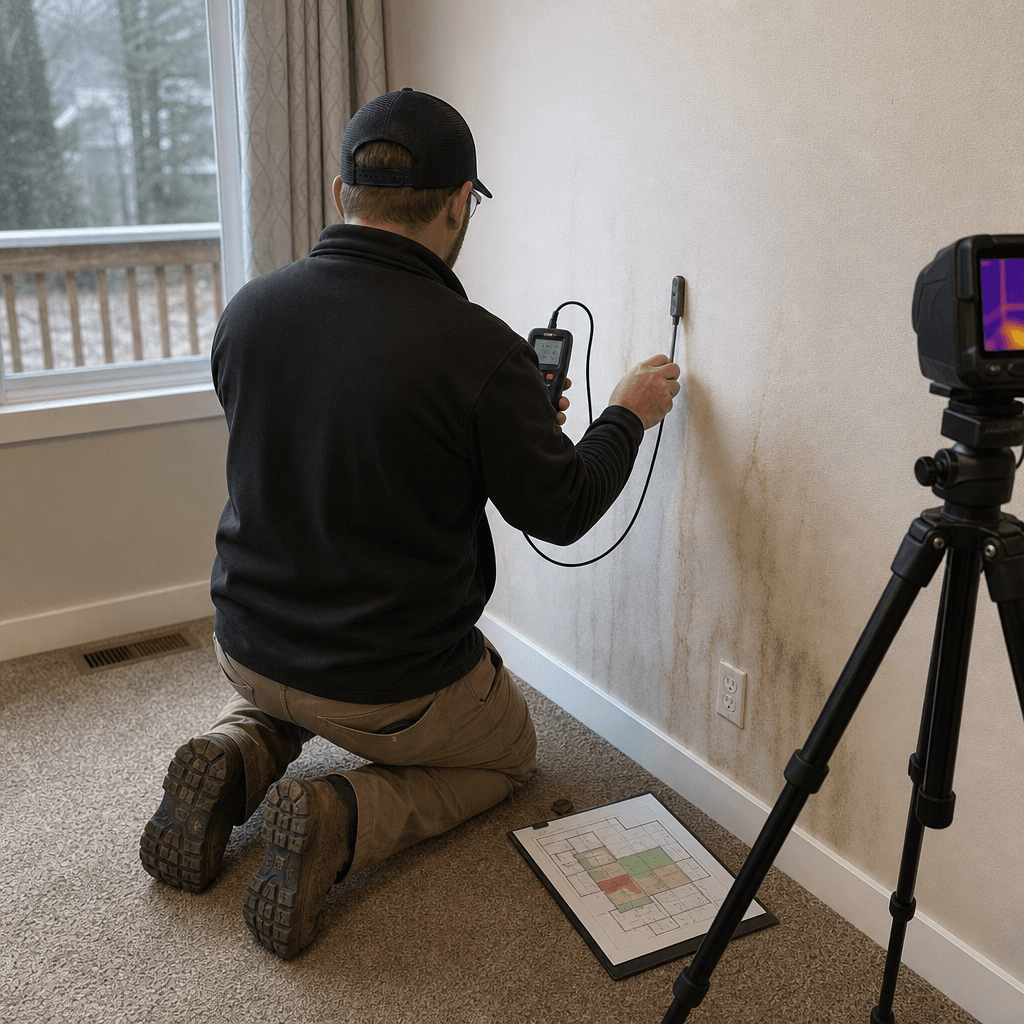
Water Damage Assessment & Documentation
On arrival, our IICRC certified technicians perform a complete water damage assessment — thermal imaging, moisture mapping, and material classification. We document everything your insurance adjuster will need.
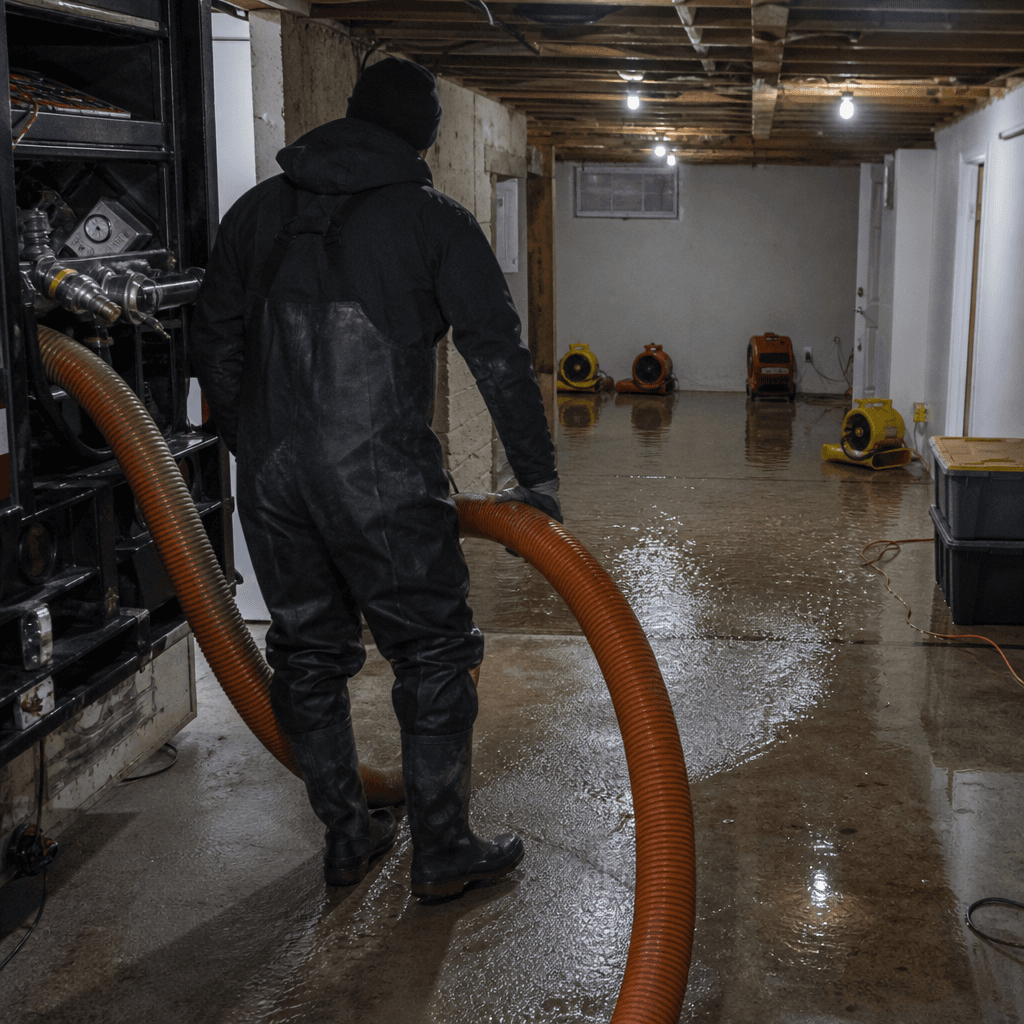
Water Extraction & Containment
We extract standing water using truck-mounted extractors and portable pumps, then contain affected areas to prevent further spread. Contaminated water events (sewage, Category 3) get full biohazard containment.
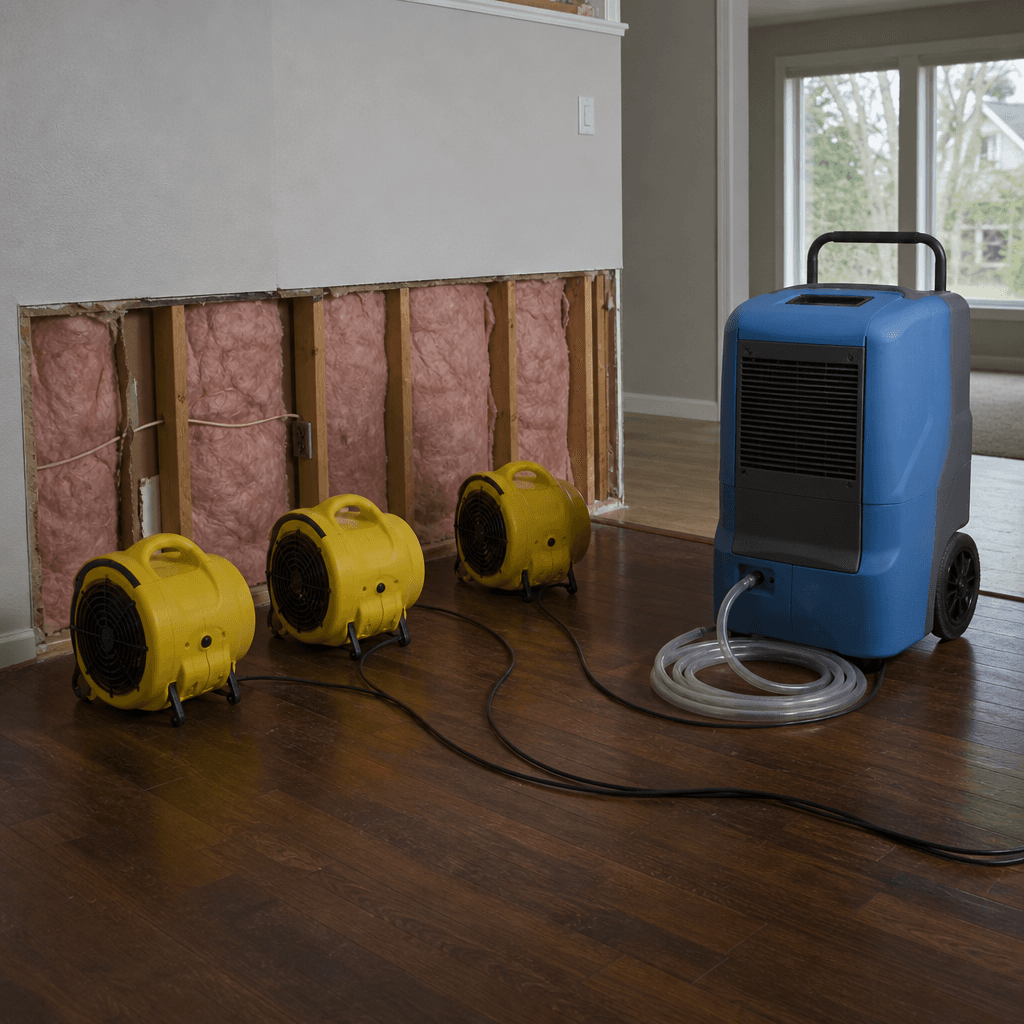
Structural Drying & Dehumidification
Commercial LGR dehumidifiers and high-velocity air movers are strategically placed throughout the affected area. We monitor daily with calibrated moisture meters until every structural component reaches safe dryness standards.
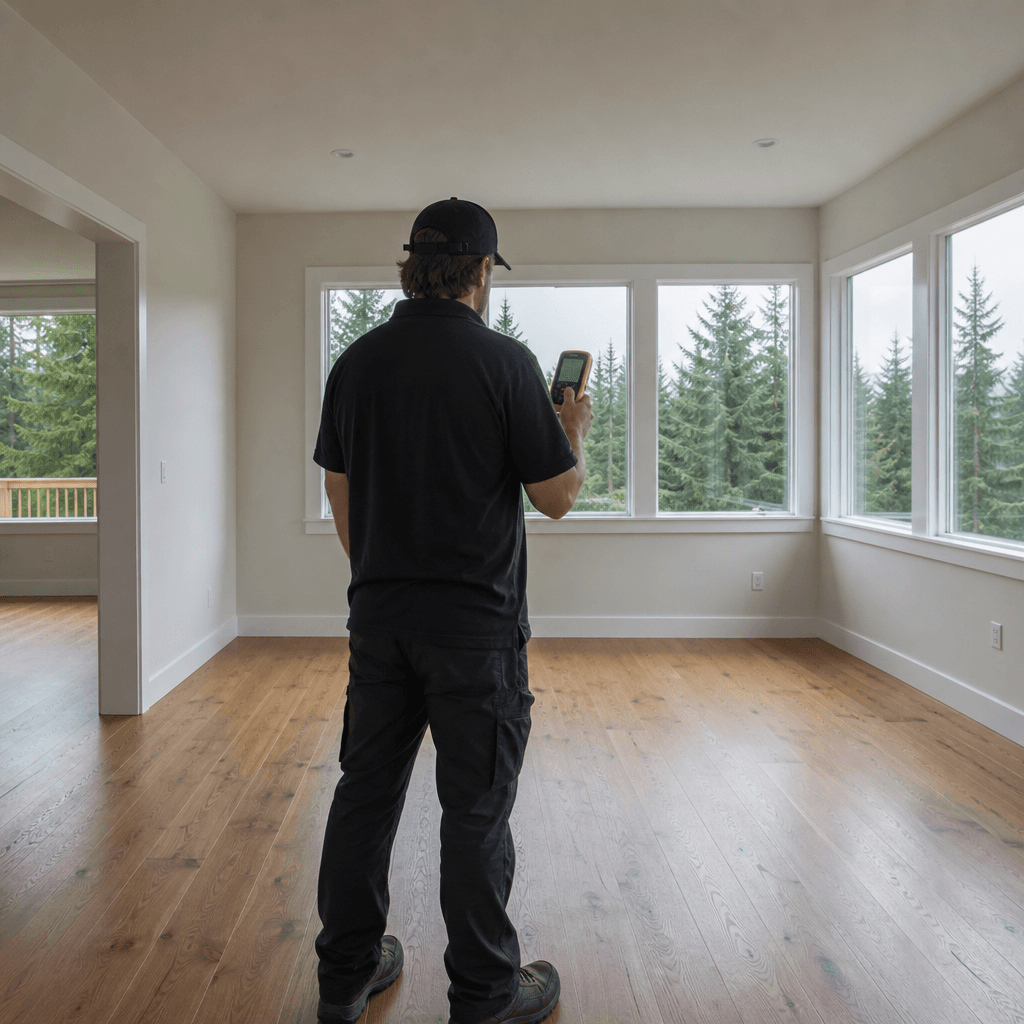
Restoration & Final Inspection
Once fully dry, we repair or replace damaged materials — drywall, flooring, insulation, framing — then conduct a final moisture inspection to confirm complete restoration. We don't call it done until every reading is clear.
Coverage Area
Water Damage Restoration Serving All of Metro Vancouver
Based in Burnaby, our water damage restoration company serves all surrounding communities throughout Metro Vancouver and the Lower Mainland.
Vancouver
Water damage restoration
Surrey
Water damage restoration
Coquitlam
Water damage restoration
Don't see your community? Contact us, we serve the full Lower Mainland and beyond.
Know What You're Dealing With
Types of Water Damage We See in Burnaby Homes
Not all water damage is the same. The source, the affected materials, and how long the water has been sitting all change what the job requires. Here's what we actually find when we arrive on site.
Burst & Frozen Pipes
A single burst pipe can push hundreds of litres into your walls and subfloor in minutes. In Burnaby winters, copper and PEX lines in unheated crawl spaces and exterior walls are the most common failure points. The water travels fast — it follows framing cavities, pools beneath floating floors, and wicks into drywall before you've even found the shut-off. Restoration involves locating every moisture front with a pin-type moisture meter, cutting drywall to the dry line, and running industrial air movers and LGR dehumidifiers until readings return to pre-loss levels.
Basement & Foundation Flooding
Burnaby's clay-heavy soil holds water after heavy rain, and that hydrostatic pressure eventually finds the path of least resistance — usually a floor drain, a crack in the slab, or the joint where the wall meets the footing. Finished basements suffer the most: carpet and underlay trap standing water against the concrete, OSB subfloor swells and delaminates, and drywall acts like a wick, drawing moisture up well above the visible flood line. Class 3 and 4 water damage — IICRC categories based on porosity and saturation depth — often require partial demolition to reach affected structural members.
Roof Leaks & Storm-Driven Intrusion
Pacific Northwest storms deliver wind-driven rain that finds its way past worn step flashing, cracked caulk around penetrations, and lifted shingles. The water enters at the roof and travels — sometimes metres — before showing up as a ceiling stain. By the time you see the stain, the insulation batts above are saturated and the drywall below has begun to sag. Thermal imaging helps us trace the actual leak path rather than guessing from the water stain alone. Attic insulation that has absorbed water must be removed and replaced; compressed or wet batts lose their R-value permanently.
Appliance Failures
Dishwashers, refrigerator ice-maker lines, washing machines, and water heaters are the leading source of slow, undetected water damage in Metro Vancouver homes. A pinhole in a braided stainless supply line behind the fridge can drip for weeks into the toe-kick cavity, soaking the particleboard cabinet bases and the subfloor beneath. By the time you notice, mould is already colonising the back of the cabinet. These jobs require removing the appliance, cutting out affected cabinetry, and drying the subfloor assembly — often with floor mat drying systems that drive heat into the wood rather than just the air above it.
Sewage Backup
A blocked main line or a surcharge during a heavy rain event pushes raw sewage — Category 3, or 'black water' in the IICRC Standard — back through floor drains and toilets. Everything the water contacts is considered contaminated: concrete, drywall, insulation, framing, and contents. Category 3 jobs require full PPE, containment, and proper disposal of porous materials. Hard surfaces can be disinfected and dried, but porous materials that cannot be cleaned to a safe standard must come out. This is not a bleach-and-shop-vac job.
Ceiling Water Damage
Ceiling damage almost always means there's more water above than the stain suggests. When a toilet overflows upstairs or a bathroom supply line fails, water saturates the subfloor, travels through the joists, and accumulates on the drywall ceiling below. The drywall paper faces act as a membrane — the water pools, the tape fails, and then the ceiling lets go. Restoration means accessing the joist cavity from above or below, removing saturated insulation, and drying the structural assembly. A ceiling that dried out on its own without being properly demoed and dried to standard almost always develops mould within 10 to 14 days.
Crawl Space Moisture
Most Burnaby homeowners don't visit their crawl space until there's a problem. What they find is usually standing water on bare soil, condensation dripping from cold-water pipes, saturated fibreglass batts hanging from the floor above, and wood joists showing signs of wood rot or mould. An unsealed crawl space in the Lower Mainland's climate is a mould factory. Proper remediation involves removing all contaminated insulation and debris, treating wood surfaces, installing a reinforced poly vapour barrier sealed at the perimeter and penetrations, and improving ventilation or installing a crawl space dehumidifier.
Not sure which category your situation falls into? Call us and describe what you're seeing. We'll tell you what it likely means and what it takes to fix it.
No Mystery, No Surprises
What Water Damage Restoration Actually Looks Like
From the first call to the final coat of paint, here's every step of what a proper restoration job involves — the equipment, the materials, the standards, and what's actually happening inside your walls.
Emergency Response & Water Extraction
The first priority on any water damage job is stopping the source and getting standing water out. We arrive with truck-mounted extractors — units that pull far more water per minute than portable wet-vacs — and begin extraction from the lowest point of the affected area. For carpet and pad, we use weighted extraction heads that compress the material to pull water from deep in the pile. Carpet pad is almost always non-salvageable once saturated and comes out immediately. Hardwood and laminate get the same attention: the faster you reduce standing water, the higher the chance the flooring can be dried in place rather than replaced.
Moisture Mapping & Damage Scope Assessment
Before any drying equipment goes down, we map the full moisture boundary using non-penetrating and pin-type moisture meters. Non-penetrating meters let us scan large areas quickly — walls, ceilings, subfloors — without causing additional damage. When we find elevated readings, pin meters verify the depth of moisture. Thermal imaging cameras find hidden moisture pockets that meters can miss: water that has tracked behind baseboards, pooled in wall cavities, or wicked up inside insulated exterior walls. Every reading gets logged with its location. This documentation matters for insurance claims and defines the drying target.
Controlled Demolition — Removing What Can't Be Dried
Some materials can be dried; some can't. Carpet pad, insulation, and heavily saturated drywall come out. The IICRC S500 standard — the industry's technical reference for water damage restoration — defines when materials must be removed versus when they can be dried in place, based on water category (clean, grey, or black) and material class. For drywall, we typically cut to the nearest stud bay above the wet line to ensure the back paper face of the drywall is exposed to airflow. Insulation batts that have absorbed water lose their R-value permanently and become a mould substrate; they're removed and bagged. All demo is done in controlled sections, not wholesale tear-out.
Structural Drying — Air Movers & LGR Dehumidification
Once the wet materials are out, the drying phase begins. High-velocity axial air movers are placed to create turbulent airflow across wet surfaces, accelerating evaporation. LGR (Low Grain Refrigerant) dehumidifiers pull that evaporated moisture from the air and condense it to drain. A typical residential water loss might run 4 to 8 air movers and 1 to 2 LGR units, checked daily. Wall cavities get drying holes drilled between studs so air can circulate inside the cavity — critical for properly drying the back side of the drywall that stays in place and the framing members themselves. The goal is returning all structural materials to their equilibrium moisture content for the local climate, typically 8 to 12 percent for wood framing in BC.
Mould Prevention & Antimicrobial Treatment
Mould can begin colonising wet building materials within 24 to 48 hours under the right temperature and humidity conditions. On jobs where water has been sitting, or where materials weren't dried to standard after a previous event, we apply EPA-registered antimicrobial agents to affected framing and concrete after cleanup. This isn't a substitute for proper drying — an antimicrobial applied over wet wood doesn't stop mould from growing. It's a second line of defence after the structure has been brought to acceptable moisture levels. Where visible mould is already present on structural framing, we remediate it under containment per IICRC S520 protocols before the rebuild begins.
Drywall Replacement & Taping
Once the structure passes final moisture readings, the rebuild begins. Drywall is cut and installed to match the existing thickness — typically 1/2" on walls, 5/8" on ceilings. Corner bead, tape, and three coats of compound (base, fill, and finish) are applied and feathered to blend with the surrounding wall. In bathrooms and wet areas, we use moisture-resistant greenboard or cement board depending on the application. Texture matching is one of the harder parts of any drywall repair: orange peel, knockdown, and skip-trowel finishes all require a skilled hand to match the original without the patch being visible after painting.
Flooring Repair & Replacement
Flooring decisions depend on what the water did to the substrate and the finish material. Hardwood that was extracted quickly and dried aggressively sometimes survives without cupping or crowning — especially engineered hardwood, which is more dimensionally stable than solid. Solid hardwood that cupped significantly may need to be sanded flat after drying, which is only possible if there's enough wear layer remaining. Laminate is almost never salvageable once the core swells. Subfloor OSB that was saturated for more than a day or two often needs to be replaced — swollen, delaminated subfloor makes flooring installation impossible and leads to squeaky, uneven floors. Tile is generally the most forgiving material, though the mortar bed and uncoupling membranes beneath it still need to be checked.
Paint, Finish & Final Inspection
The job isn't done until the repaired areas are indistinguishable from the untouched ones. We prime all new drywall with a quality PVA primer before painting — fresh drywall absorbs paint differently than the surrounding wall, and skipping primer means the patch will flash through even after multiple paint coats. Colour matching uses the existing paint sheens and formula from your cans where available, or a spectrophotometer scan at the paint store. Final inspection includes a complete moisture reading walkthrough to confirm all readings have returned to pre-loss baseline — documented in writing. This documentation, along with the initial moisture map and daily drying logs, forms the technical record for your insurance claim.
Every job is different. Scope, timeline, and cost depend on the water category, affected area, and material types. We walk you through every step before work begins and document it all for your insurer.
Frequently Asked Questions
Water Damage Restoration Burnaby — Your Questions Answered
How quickly can you respond to a water damage emergency in Burnaby?
+
Our Burnaby water damage restoration team responds around the clock. When you call, we dispatch immediately and aim to have a crew on-site as fast as possible. The sooner we arrive, the less secondary damage — including mould — you'll face.
What does the water damage restoration process involve?
+
A thorough water damage restoration project involves five key phases: assessment and moisture mapping, water extraction, structural drying with industrial dehumidifiers and air movers, mould prevention treatment if warranted, and final repairs and inspection. We follow IICRC S500 standards throughout every phase.
Will my insurance cover water damage restoration in Burnaby?
+
Many homeowner insurance policies cover sudden and accidental water damage — burst pipes, appliance failures, and certain types of flooding. Coverage depends on your specific policy and the cause of the damage. We document everything thoroughly to support your insurance claim and can work directly with your adjuster.
How long does water damage restoration take?
+
The structural drying phase alone typically takes three to five days, depending on the severity of water penetration, the materials affected, and ambient conditions. Full restoration including repairs can take longer. We monitor moisture levels daily and never rush the drying phase — incomplete drying leads to mould.
What types of water damage do you handle?
+
We handle all categories of water damage: Category 1 (clean water from burst pipes or supply lines), Category 2 (grey water from appliance overflows or washing machines), and Category 3 (black water / sewage backups requiring full biohazard protocols). We also handle storm-related flooding and roof leak damage.
Do you handle basement flooding in Burnaby?
+
Yes — basement flooding is one of our most common calls in Burnaby and the Lower Mainland. We extract standing water, dry all affected structural components including concrete, framing, drywall, and insulation, and address the source of the flooding to prevent recurrence.
Can water damage cause mould in my home?
+
Yes. Mould can begin developing within 24 to 48 hours of a water intrusion event if moisture isn't properly managed. This is precisely why rapid extraction and thorough structural drying are critical — surface drying is not enough. We achieve verified dryness with calibrated moisture meters before closing any work.
Do you offer free water damage assessments?
+
We offer a free on-site water damage assessment. Our technicians will inspect the affected area, identify the scope of damage, and walk you through what a proper restoration plan looks like for your specific situation — with no obligation.
Free Water Damage Assessment
Request a Free Water Damage Assessment & Repair Estimate
Tell us what happened and we'll get back to you fast. For active water emergencies, call us directly at (604) 200-3261.
Ready to Restore Your Property?
Burnaby's Water Damage Restoration
Specialists Are Standing By
Whether you're dealing with a flooded basement, a burst pipe, storm damage, or the aftermath of a sewage backup — our Burnaby restoration company is here to help. Call now for a free assessment and same-day emergency response.
IICRC Certified · Licensed & Insured · Serving Burnaby, BC and all of Metro Vancouver